
Piping Surge Analysis in India: Preventing Water Hammer Before It Damages Your Plant
A pump trips and a check valve closes against the flow, and within a second the pressure wave propagates through the pipeline. In worst cases, the surge pressure may be several times the design pressure, bursting a pipe, shearing a flange, and breaking a support off its steel. This is why piping surge analysis in India is critical for process plants.
Piping surge analysis lets you see that wave on a monitor before it hits your plant. This tutorial introduces you to the fundamentals of surge, its causes, how a surge study is conducted, the associated codes, and how the results help your pipe stress analysis.
Contact Us For Piping Surge Analysis Service
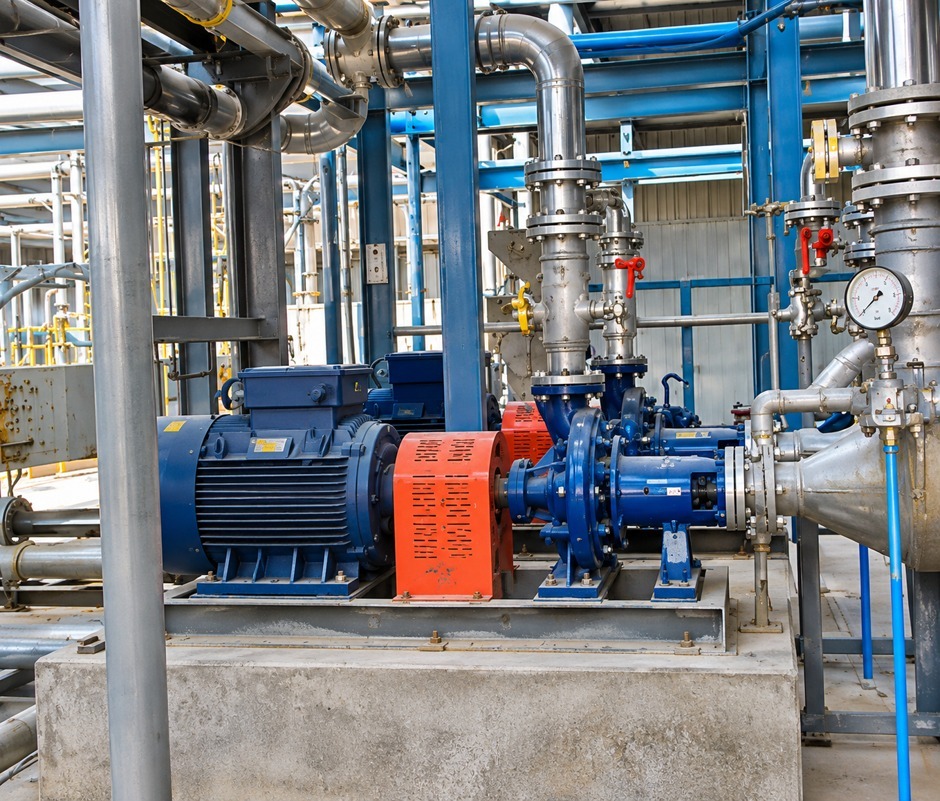
If you are looking for a piping surge analysis company in India, this guide also shows what a good study should provide.
What is surge, and why is it called water hammer?
The pressure surge is a pressure wave that happens when the fluid in a pipe accelerates or decelerates suddenly Fluid moving through the pipe has the kinetic energy, and if the valve closes or the pump is shut down, then that kinetic energy is converted into a pressure pulse. This pressure wave travels back and forth until it is dissipated by friction in the pipe (hence, the noise often appears as a “hammer” sound in the pipe).
The quickest way to judge severity is the Joukowsky equation:
Δp = ρ · a · Δv
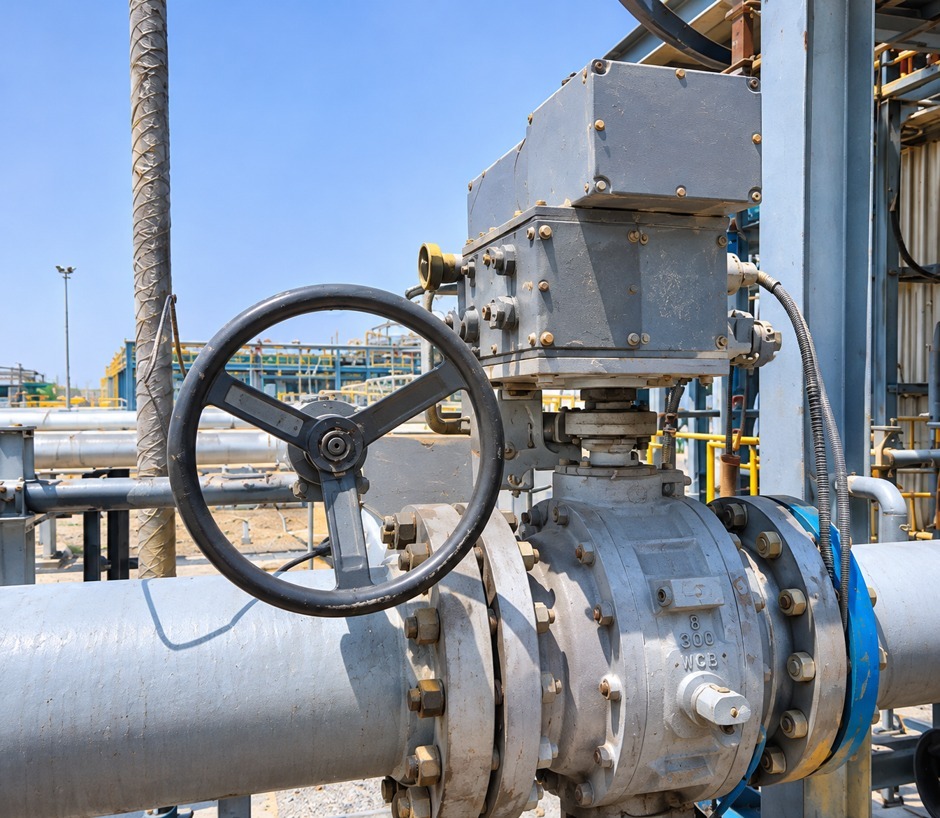
Where ρ = fluid density, a = pressure wave speed and Δv = change in velocity. Imagine you take water running at 1 m/s and stop it suddenly in a steel pipe where the pressure wave speed is around 1,000 m/s. The pressure would then increase by about 1,000,000 Pa (= 10 bar) above the existing line pressure.
Two more figures matter. The pipe period, T = 2L/a, is the time a wave takes to travel the pipe length and return. Any valve closure or pump trip faster than 2L/a is a fast event and could produce a genuine surge.
Why a simple equation is not enough: Joukowsky considers only a single, straight pipe with no branches and an instantaneous event. In actual plants there are branches, tanks and check valves. Pumps have inertia and sometimes even vapour can boil. The equation also neglects column separation, where pressure drops below the vapour pressure, a vapour bubble develops and then collapses with a violent spike. All of this is modelled by a transient simulation.
Where surge starts in a real plant
Surge is not an uncommon event. For some pipelines, most of their operating lifetime is during transient operation. These are the types of events we typically model:
Pump trip or power failure. Flow collapses within seconds, which causes the check valve to slam shut and a low-pressure wave to set in immediately after the high-pressure one.
Rapid valve shutdown. The majority of the damage occurs toward the end of the stroke, that is, at about the last 15 per cent of a butterfly valve, 25 per cent of a ball valve and 30 per cent of a plug valve.
Emergency shutdown (ESD) valves. ESD valves have to be capable of rapid closure and therefore they are often the prime sources of surge in refinery and process units.
Pump start-up or filling pump line quickly. Air is compressed or rapidly expelled producing a pressure shock wave down the line.
Stop valve slam Reverse flow builds prior to the valve seating then decelerates.
This damage is caused by: burst pipe; broken fittings; leaks at flanges; deformed pipe or supports; damaged or vibrating pump. The effect is exaggerated by long runs of pipe, where more fluid momentum is stored between bends.
How a surge study is done
Such an analysis should be a smooth journey, taking you from data gathering through to a plant-compatible design.
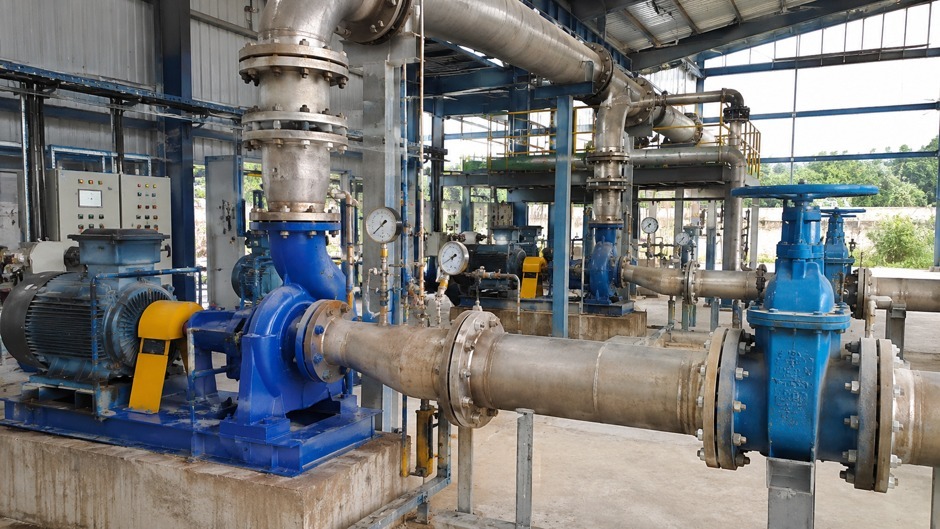
Pump trip or power failure. Flow collapses within seconds, which causes the check valve to slam shut and a low-pressure wave to set in immediately after the high-pressure one.
Rapid valve shutdown. The majority of the damage occurs toward the end of the stroke, that is, at about the last 15 per cent of a butterfly valve, 25 per cent of a ball valve and 30 per cent of a plug valve.
Emergency shutdown (ESD) valves. ESD valves have to be capable of rapid closure and therefore they are often the prime sources of surge in refinery and process units.
Pump start-up or filling pump line quickly. Air is compressed or rapidly expelled producing a pressure shock wave down the line.
Stop valve slam Reverse flow builds prior to the valve seating then decelerates.
This damage is caused by: burst pipe; broken fittings; leaks at flanges; deformed pipe or supports; damaged or vibrating pump. The effect is exaggerated by long runs of pipe, where more fluid momentum is stored between bends.
Codes and standards that govern surge limits
The surge is considered an occasional load, so the code permits an allowable surplus to the design pressure for some limited time. The extent varies on the code and edition used, and permission is normally subject to owner approval.
Faster Design Process
Code | Paragraph | What it means for surge |
ASME B31.3 (process piping) | 301.2.2 | Consider pressure oscillations and surges. Piping that has no relief protection is only rated for the maximum pressure it can experience. |
ASME B31.3 | 302.2.4 | Owner approval – Up to 33% over pressure for no more than 10 hours at a time and 100 hours annually, or up to 20% for no more than 50 hours at a time and 500 hours annually. |
ASME B31.3 | Occasional stress | Stresses due to surge loads are then compared to 1.33 x hot allowable stresses (Sh). |
ASME B31.4 (liquid pipelines) | 402.2.4 | There shall be no more than 10% surging pressure over design internal pressure. |
ASME B16.5 flanges | Pressure–temperature ratings | Flange ratings are not sur-passed in the surge, only a high peak can result in a higher flange class or protection. |
In addition to these, Indian Standards (IS) and client or licensor specification may also apply depending on the project. We specify the governing code and allowance in all reports so your reviewer can verify the basis in minutes.
Surge protection: choosing what to install
There are rarely one ‘correct’ answer. Every device balances cost, space and reliability, and the study identifies which combination maintains pressures within tolerances. The most critical consideration is whether the device is still effective when there is no power.
Option | How it helps | Works in a power failure? |
Surge vessel or gas accumulator | Supplies or absorbs liquid so pressure is not collapsed or elevated; just off the source it prevents column separation | Yes |
Air and vacuum valves | Vacuum to cut off the admission air and release it by releasing it slowly | Yes |
Surge relief valve | Opens to Bypass the over-pressure situation – typically the most practical solution when replacing pipe is too expensive | Yes |
Pump flywheel | Provides inertia so the pump decelerates slowly | Yes |
Intermediate check valves | Separated one long line in to pieces, and can cut the tour to a bit, but. | Yes |
Slow-closing valves, soft starters, VFDs | Stretch the event over a longer time | No, they need power |
Larger diameter, rerouting, higher pressure class | Reduce velocity, take the highs down or add points to the rating | Yes |
We run through each of the options in the model, then select the less costly one which leaves the residual surge. We suggest the smallest design that is code-compliant. We verify alternative options rather than jamming a new device into a tight plant.
Surge and pipe stress: where tight layouts and supported supports come in
A pressure answer does little more than step on the brakes during a surge event. The pressure wave hits all of the pipe elbows, tees and valves as it moves through the system and it is the unbalanced force in each pipe leg which loads your support beams and process nozzles
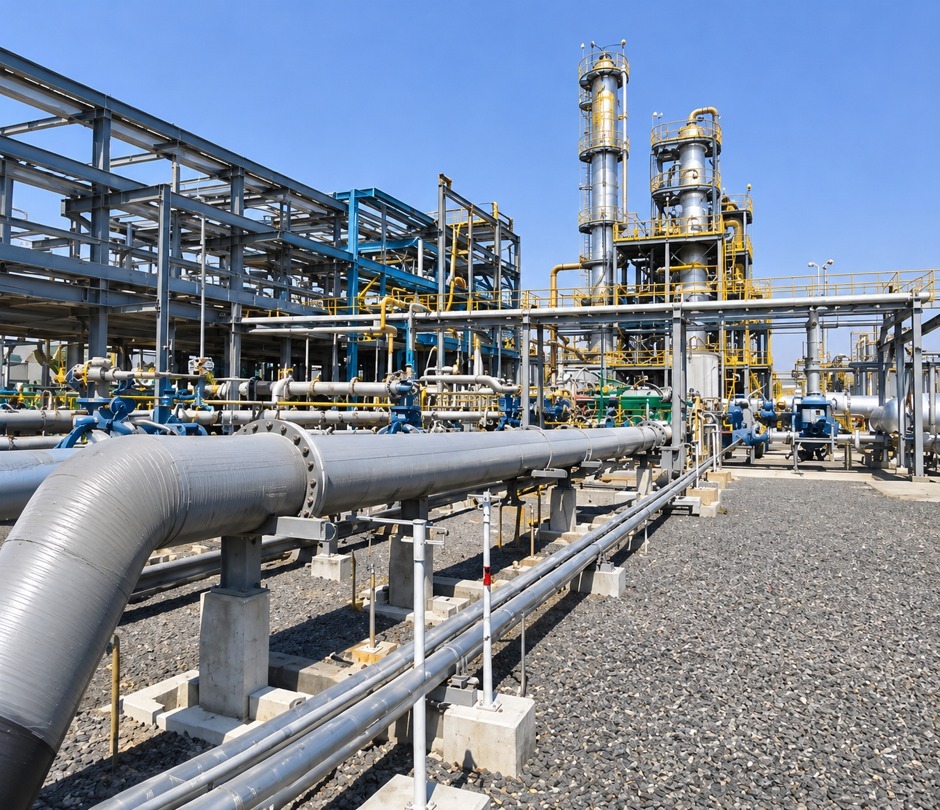
It happens to compact packages like pharma suites, congested refinery units, and other crowded installations. The short distance between elbows creates concentrated forces. Supports that were provided to accommodate the thermal growth of the pipe may be too flexible to take on an instant surge load, and surge restraints will then inhibit the thermal flexibility needed, while conveying loads to pump and vessel nozzles.
The way to fix it is just to treat the two studies as the one loop:
- Perform the transient analysis and export the force imbalance for each bend.
- Use these forces in a dynamic pipe stress model and validate supports, nozzles and stress against the occasional-load limit.
- If one or a support or a nozzle is broken, change layout or type of support; or you can restrict the surge itself, having a relief valve, an accumulator or a slower closing.
- -Re-run each model until all pressure, stress and the nozzle loads test pass.
This eliminates the hassle of going back and forth between the hydraulic consultant and stress engineer for weeks.
Which plants require a surging examination in India
Any run of a liquid line with a pump, a fast valve or a long run. This is what we encounter the most in Pune, Mumbai, Gujarat, Hyderabad, Chennai, and other industrial regions, for instance
- Pharma and biotech. Utility loops, cooling water, chilled water and process transfer lines in compact buildings with tight routing.
- Refineries and Petrochemicals. Transfer, loading, ESD valves and Cooling water headers with large pumps and long pipe racks.
- Water and wastewater. Raw water and treated water pumping mains, where a power cut is the normal design case.
- Power & Industrial Utilities. Cooling water, boiler feed and fire water systems.
- New wells or entire new lines. New pumps or greater flows added to an old line that was never checked for transients.
The very same approach could be used on overseas projects: – for instance pharma jobs and also refinery projects in Singapore as the research study is carried out in the software application and also provided as report your neighborhood group can review.
What you receive from a surge study
- Maximum and minimum pressure profile along each line, for every event analysed
- Verify with pipe, flange and equipment ratings and the code allowance that will control.
- Protection design (Sizing and set points for each device)
- Closure times for pumps and valves, regulations, standards and more.
- Force imbalance files and load tables for pipe stress and support design
- A report your client, licensor or reviewer can clearly audit
Frequently asked questions
Is surge analysis different to water hammer analysis?
In reality, yes. Water hammer is the popular term for surge in the liquid lines. Surge or hydraulic transient analysis is the generic term that also includes pump start-up, pulsation and column separation.
Purpose of surge analysis. When should you get a surge study?
Any time a line has a pump that trips, a valve that can close or a long run. ASME B31.3 mandates the inclusion of pressure oscillations and surges in design, so doing a study is also a way of documenting you’ve done it.
What data do you require?
P&IDs or isometrics and pump curve and inertia, valve types and closes times, check valve data, fluid properties, operating and upset cases.
Can the surge study provided to us be used for our pipe stress analysis?
Yes. We export the unbalanced forces at bends and use them in the dynamic stress model so that supports and nozzles are checked for the actual surge load.
How long will it take?
It depends on the lines and cases we will confirm the time after we have checked your P&IDs and data.
Protect your plant before the first trip
Send us your P&IDs, pump data and valve information at [email] for a preliminary surge study scope and cost. We’ll identify which lines require a complete transient model and which are safe.