
KKR Bose Design Services Pvt. Ltd. engineers offer safe and dependable Piping Stress Analysis Calculation Services. As part of our piping stress analysis services, our engineers can accurately assess internal pressure stresses, longitudinal stresses, thermal expansion stresses, sustained loads, and support reactions. These calculations can be beneficial for EPC contractors, consultants, OEMs, fabricators, and industrial plant owners looking to verify critical piping parameters before fabrication and installation. These calculations are typically used to cross-check results from software analyses and validate specific piping components are properly designed as per applicable piping codes.
Engineering software has automated many of the tasks associated with designing piping systems. However, engineering calculations still play an important role in the evaluation process. Today we are sharing our expertise in Stress Analysis Calculations performed ly.

01
Chat on WhatsApp
Piping stress analysis calculations
Piping Stress Analysis CalculationsIndia Pipes experience stress from internal pressure, expansion/contraction, dead weight, and occasional loads like wind or earthquakes. In each case, the piping must have sufficient strength to safely resist the applied stresses. Additionally, piping supports must be able to handle the resulting reactions without exceeding their load capacities.
KKR Bose engineers will evaluate internal pressure, expansion stresses, deadweight, and occasional loads via detailed stress calculations performed ly. calculations are useful for conceptual engineering estimates, preliminary design reviews, and independently verifying software calculated results.
Rather than taking software results as fact, our engineers will verify critical parameters using engineering calculations supported by international engineering practices. The additional level of review provides our clients with increased design confidence, reduces engineering risk, and helps ensure the piping system is safe and code compliant.
02
Internal pressure and longitudinal stress calculations
Pressure causes stress to develop in all directions inside a pipe. The result is hoop stress and longitudinal stress. We can determine the pipe wall thickness required to safely handle internal pressure by calculating hoop stress. KKR Bose engineers can ly review these stresses to ensure adequate strength and design.
Calculation of internal pressure and longitudinal stress will be performed based on international codes and engineering practices.
03
Expansion and weight stress calculations
A change in temperature will cause a pipe to expand or contract when heated or cooled. If the piping is restricted from moving, stresses will develop inside the pipe wall. Weight also causes stress to develop in piping systems. We must account for pipe movement and apply the proper supports to control movement. These supports include guides, anchors, spring hangers, and expansion loops. KKR Bose engineers will ly calculate the thermal expansion and contraction stresses, sustained weight loads, and support reactions.
These calculations will help you select the correct pipe supports to properly control piping movement while minimizing the stress applied to connected equipment.
Need expansion or pressure stress calculations reviewed?
04
Piping stress analysis services
KKR Bose offers comprehensive pipe stress analysis services including flexibility analysis and supports needed to control piping motion. Our engineers will evaluate sustained and occasional loads, expansion stresses, support reactions, nozzle loading, stress verification, piping codes, and much more. Based on our findings we will make recommendations for any piping modifications needed.
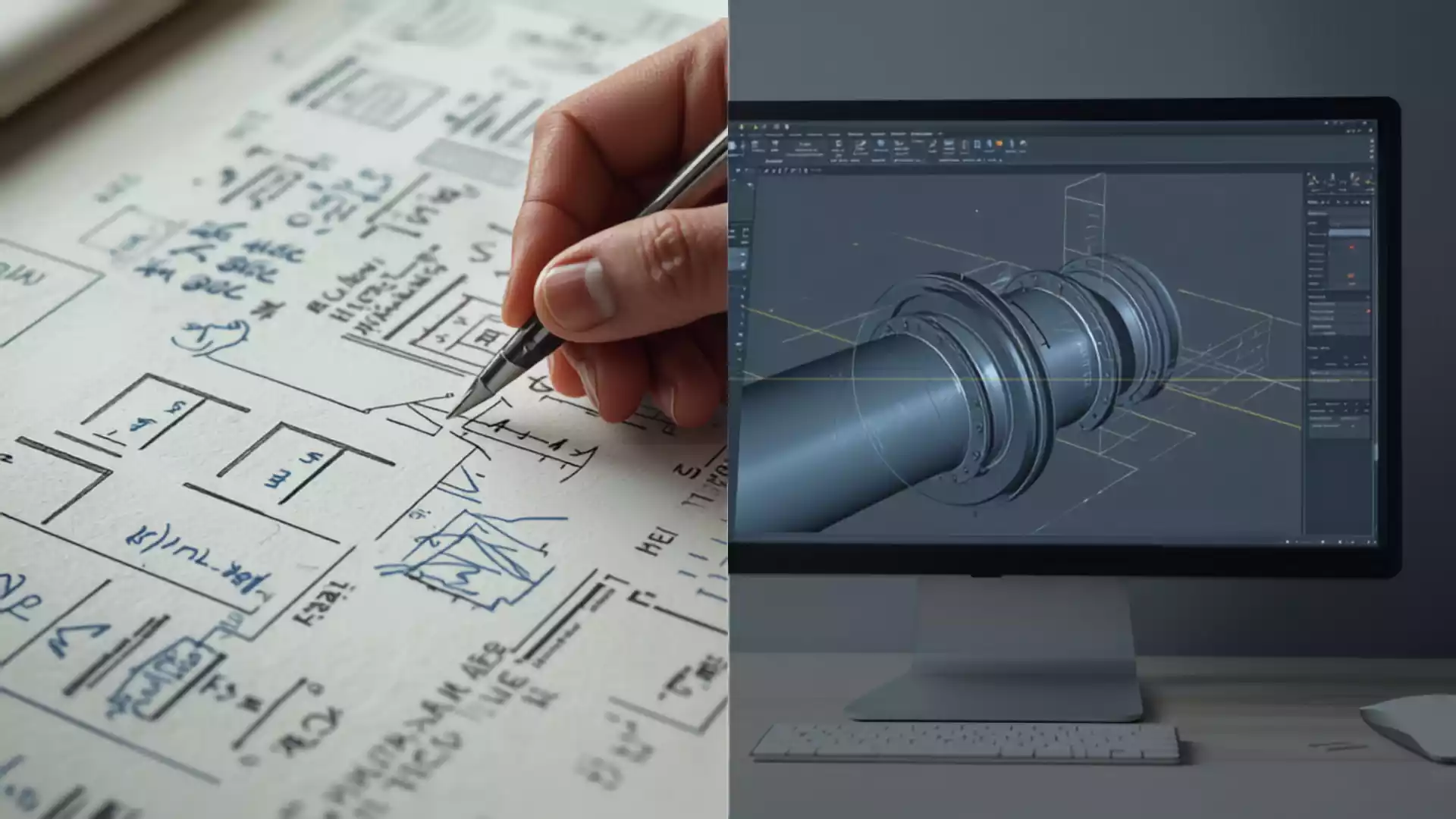
Our engineers use industry standard software for analyzing complicated piping networks. We recognize the value calculations provide and offer them as part of our pipe stress analysis services. Contact us today to learn how our services can help optimize your industrial piping systems and save you money.
05
Code compliance checking for piping calculations India
Each piping system is designed to meet accepted engineering standards and codes to ensure safe operation and regulatory acceptance of the facility. stress calculations are performed per appropriate piping codes such as ASME B31.1, ASME B31.3, ASME B31.4 and project-specific engineering specifications.
We check stresses against allowable limits, confirm pressure cases and flexibility requirements, reactions on supports and other design criteria to ensure the piping system has been designed to meet code. Providing this systematic review assists our clients in obtaining safer designs, easier project approvals and higher confidence throughout engineering reviews and inspection.
06
Independent piping stress review in India
A higher level of risk reduction can be obtained by reviewing critical piping systems through independent engineering. At KKR Bose Design Services, we provide piping stress review to help validate results from piping analysis software, provide third-party piping review and support independent safety reviews.
We review piping calculations, key design assumptions and independently check stresses, support reactions, thermal growth and code compliance. This service is ideal for clients operating high-risk industrial facilities, supporting engineering dispute resolution, owner provided engineering reviews (OPE) and projects where government regulatory bodies or independent engineers require a third-party technical review.
Need an independent piping stress review?
07
Chat on WhatsApp
Best piping stress review companies in India
Meet your piping stress analysis needs with help from KKR Bose Design Services Pvt. Ltd. Our Piping Stress Analysis Services in India have been helping industrial projects realize technically accurate, code compliant and constructible engineering. With a combination of old school calculations and state-of-the-art analysis software our team of engineers can provide stress analysis for just about any project from simple line reviews to complex process piping.
KKR Bose Design Services has experience with both hand calculations and complex analyses performed using world-class software such as CAESAR II, Bentley AutoPIPE, and more. We use this experience to help you verify critical calculations, optimize piping supports, reduce piping flexibility and confirm that your piping meets international codes.
If you need hand calculations to assist with software evaluations, quickly verify software results, or have a project where you would just like a third set of eyes prior to construction. Our team can provide piping stress review to give you peace of mind knowing your project is safe, reliable and built to last. And it all can be done within your project schedule.
Need expert piping stress analysis support?
Visit our website at https: //bosedesignservices.co.in and see what we can do to support your next project. Learn more about our Piping Engineering, Pipe Stress Analysis Services, Plant Design Services, Pressure Vessel Design Services, Heat Exchanger Design Services, and Process Equipment Design Services.
Give us a call at KKR Bose Design Services today to learn how we can support your next project with precise piping stress calculations, independent engineering verification or a custom quote.
Ready to start your piping stress review?
FAQ
FAQ
A piping stress calculation formula is an equation used to ly calculate stresses in pipes. Pipe stress engineers use these formulas to analyze the mechanical properties of piping components under different types of stress: hoop stress, longitudinal stress, sustained stress, and expansion stress. Different formulas use inputs such as internal pressure, pipe size and wall thickness, temperature change, allowable stress of material, and applied load to determine the stress result.
stress calculations are based on engineering mechanics and material properties. Internationally recognized codes like ASME B31.1 and ASME B31.3 are also used to calculate piping stresses. Engineers use these stress calculation methods to independently verify critical piping stress results from software analysis. This is common piping engineering practice and ensures quality engineering work.
Engineers perform piping stress calculations to verify results from computerized piping stress analysis software. Examples of engineering software include CAESAR II, PSMARB, PEPAWARI, AUTOSTRESS, etc., and Bentley AutoPIPE. Checking results independently confirms that software assumptions are correct and that the mathematical results produced by the software are accurate.
calculations can easily be performed during conceptual design stages, in plant startups, for minor pipings, or when assessing localized areas of piping. Quality engineering companies will perform these calculations regularly when reviewing piping designs from other firms. Performing a quick calculation provides the engineer with more confidence when reviewing high-risk piping and allows engineers to double-check their work.
Professional Pipe Stress Analysis Services include piping flexibility analysis, sustained load analysis, thermal expansion analysis, occasional load analysis, support load analysis, nozzle load review, pipe support sizing, stress analysis, and stress reports.
KKR Bose Design Services’ offering also includes independent design verification, piping layout review, code review, piping flexibility improvement recommendation, and piping support improvement recommendation. Each pipe stress analysis considers the project’s operating conditions, design codes, and client needs to ensure the safe operation of the plant and equipment.
A pipeline will thermally expand and become longer when operating at elevated temperatures. When anchors, equipment nozzles, or lack of pipe flexibility prevent the pipeline from expanding, additional stresses will occur in the piping system.
Engineers must calculate thermal expansion and accommodate growth to prevent imposing undue stress on equipment, creating large nozzle loads, and reducing piping reliability. The piping stress engineer calculates thermal expansion by determining the material’s thermal expansion coefficient, piping length, operating temperature, support conditions, and piping flexibility.
Engineers should utilize calculations when checking designs, verifying software results, checking localized areas, reviewing minor modifications, or providing independent engineering reviews. Many engineering companies use calculations when performing design reviews, owner’s engineering, third-party reviews, or safety audits.
Software programs are better suited for large piping networks with many mechanical and thermal load connections. However, utilizing both calculations and software provides the best level of assurance as critical calculations can be verified and critical results can be confirmed.