
Plate and frame heat exchanger working principle
The Plate and Frame Heat Exchanger uses metal plates to quickly and efficiently transfer heat between two fluids while preventing them from mixing. It is composed of a stack of thin corrugated metal plates housed inside of a rigid frame. Channels are formed between each plate where hot and cold process fluids flow through alternate channels. Thermal transfer occurs through conduction across the surfaces of each plate. Highly efficient heat transfer is promoted by the turbulent flow created by the corrugated plate design. This engineered turbulence increases heat transfer and minimizes pressure drop. The heat exchanger offers small footprint relative to its thermal transfer capabilities. Plate and frame heat exchangers are commonly found in chemical processing, pharma, food processing, HVAC equipment, dairy processing, power plants, marine applications, oil & gas industries, and water treatment facilities. Benefits of using a plate and frame heat exchanger include higher efficiency, flexible capacity upgrades, ease of maintenance, and lower operating costs.
Plate and frame heat exchanger design and parts
Quality components and engineering design play an important role in the performance and longevity of your Plate and Frame Heat Exchanger. At KKR Bose Design Services our engineers carefully determine plate layout, material of construction, plate geometry, gasket type, frame design, and flow pattern to ensure your heat exchanger is as thermally efficient as possible while satisfying your processes requirements. The plate material, gasket, and frame are designed based on operating temperature, pressures, fluids, fouling factors, corrosion allowances, maintenance requirements, and future expansion requirements. Our expertise allows us to design heat exchangers that provide reliable, long-term operation, reduced cost of ownership, and lower operational expenses. We provide clients with detailed engineering, including thermal calculations, mechanical design, mechanical drawings, GA drawings, bill of materials (BOM), and manufacturing assistance.
KKR Bose Design Services provides Plate and Frame Heat Exchanger design services for the widest range of industrial applications. Learn more about how we engineer cost-effective solutions for your business by exploring the topics below.
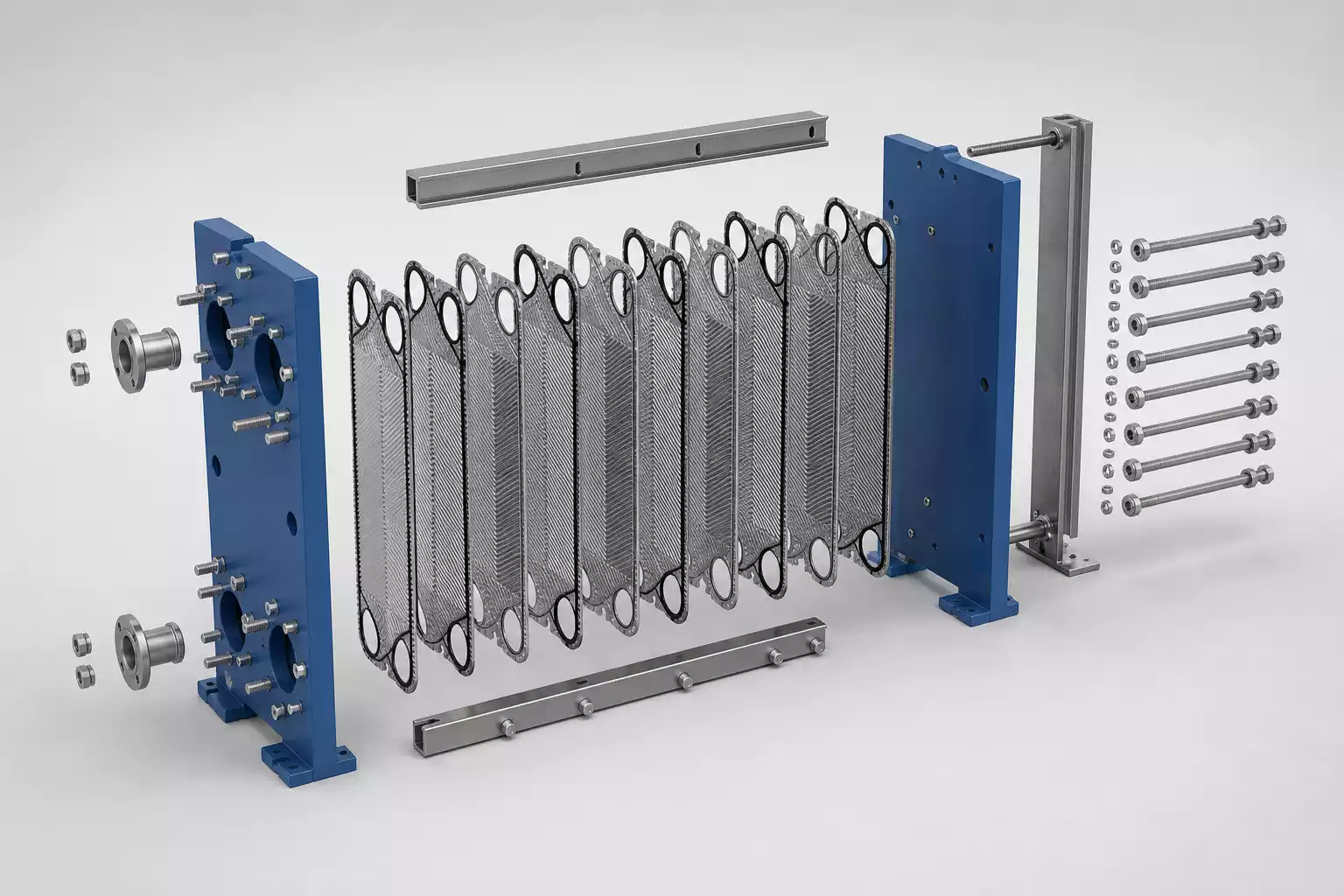
plate and frame heat exchanger design aspects
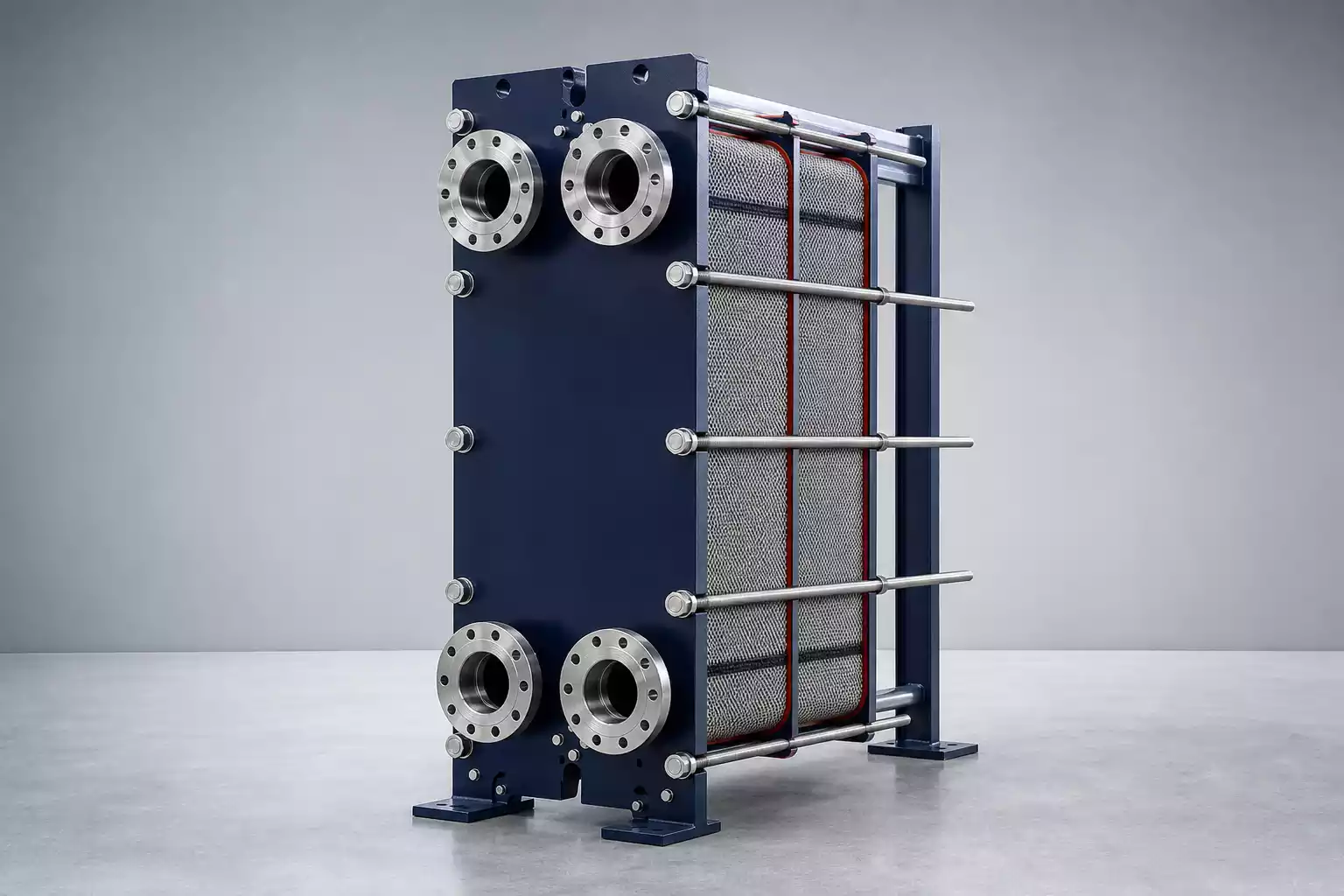
High Quality Plate Material
Plate Heat Exchangers are only only as good as the plates they are made from. Selecting corrosion-resistant materials with high thermal conductivity is extremely important to the longevity and heat transfer efficiency of your heat exchanger.
At KKR Bose Design Services Pvt. Ltd., we take into account the process fluid, temperature, pressure, and corrosion needs when selecting plate material so that your heat exchanger will have a long service life and efficient heat transfer capabilities.
Material options we offer include Stainless Steel (SS304/SS316/SS316L), Titanium, Hastelloy, and other corrosion-resistant alloys. All of these materials offer superior resistance to chemicals, seawater, acids, chlorides, and high temperatures. In addition to great chemical resistance, these alloys have exceptional thermal conductivity and mechanical strength which our engineers use to minimize corrosion and prolong equipment life.
Frame and Gasket Design
Plate and Frame Heat Exchangers require a strong frame assembly and proper gasket material to operate safely and efficiently. Our engineers design sturdy frames that can handle the operating pressure and create uniform compression on the plate pack.
The gasket plays an important role in keeping your process fluids contained. Gasket material is selected based on temperature, pressure, and chemicals that it will come into contact with. Typical gasket materials include NBR (also known as Nitrile Rubber), EPDM Rubber, Viton (FKM), and many other elastomers. Gaskets provide a leak-free seal between every plate, keeping your hot and cold fluids separate while preventing leaks on the outside of the heat exchanger. Proper material selection can also enhance equipment reliability, reduce maintenance, and prolong equipment service life.
plate and frame heat exchanger design calculations
Thermal calculations are performed on every Plate and Frame Heat Exchanger designed by KKR Bose Design Services. Our experienced thermal engineers complete heat exchanger design calculations to select the optimal configuration and specify all of the required dimensions needed to construct your equipment.
Calculations are performed based on process data, operating parameters, and customer requirements to ensure your heat exchanger will provide maximum thermal efficiency at the lowest possible energy cost. Our engineers use calculations to determine heat duty, flow rate, inlet/outlet temperatures, pressure drop, fluid properties, fouling factors, U-Value, and required heat transfer area. Calculations are also used to select the plate pattern, number of plates, channel configuration, and overall heat exchanger dimensions needed for reliable operation.
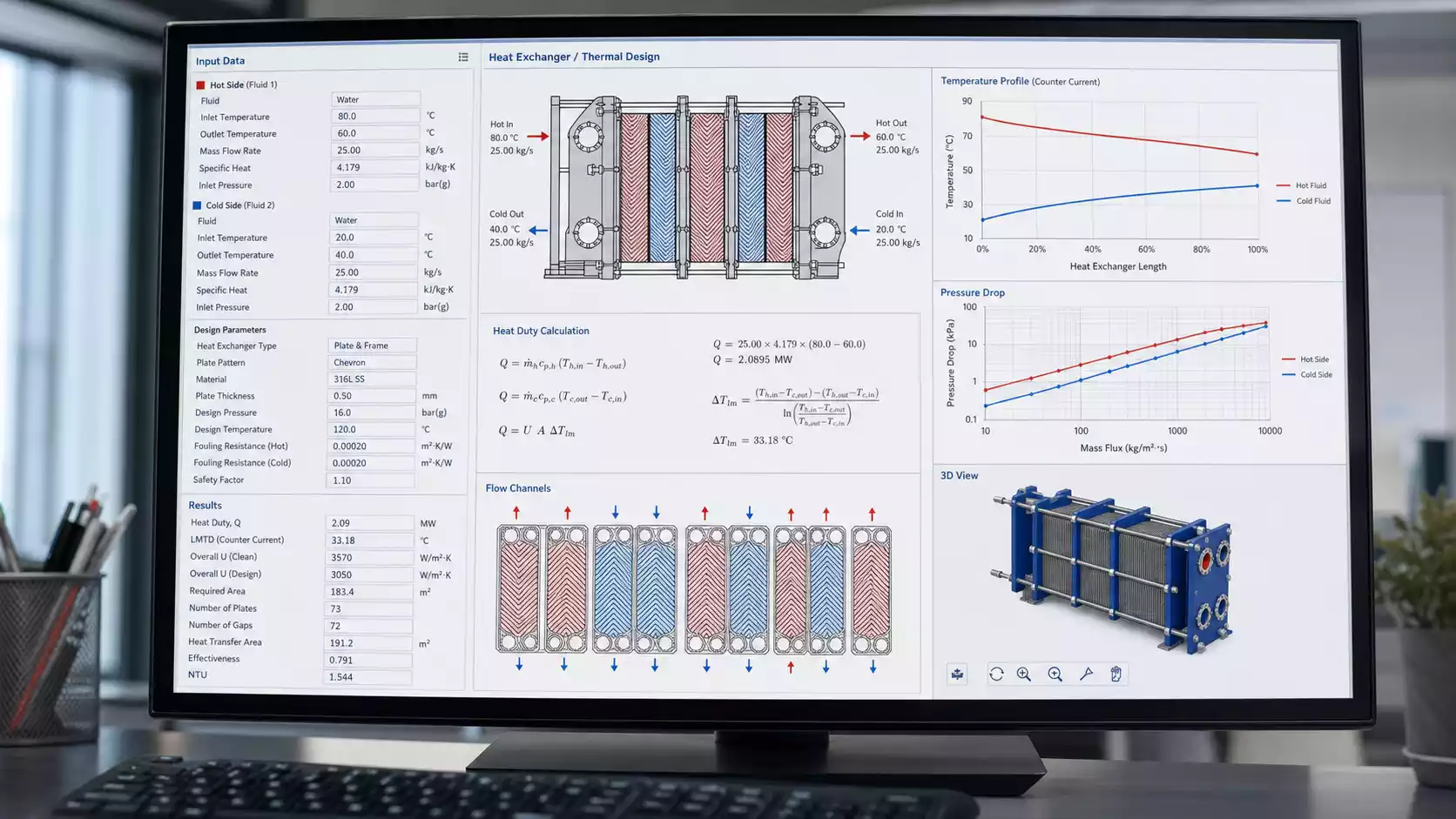
Heat Load and Sizing Calculation
Performing a Heat Load and Sizing Calculation is one of the most critical steps when engineering a Plate and Frame Heat Exchanger. Heat Load Calculations are used to size the overall heat transfer area required to transfer a specific amount of heat between two fluids.
Our engineers will calculate the total heat that needs to be transferred based on the mass flow rate, inlet temperature, outlet temperature, and fluid properties of both fluids. Once the heat duty is determined, we can select the plate layout, number of plates, plate dimensions, channel configuration, and overall heat exchanger dimensions needed to transfer the required amount of heat. Properly sizing your heat exchanger will allow for efficient heat transfer without oversizing the equipment, reducing your initial capital cost and energy consumption while maintaining stable operation throughout your plant’s lifetime.
plate and frame heat exchanger design pressure
Allowable pressure drop is another important design parameter that will affect your heat exchanger’s performance and the overall cost of your plant. Pressure drop across a Plate Heat Exchanger will affect how much heat can be transferred and how hard your pumps and process equipment has to work.
Our engineers take into account pressure drop during the design process to make sure we provide enough heat transfer surface area to transfer the required duty without imposing large pressure drops. Calculations take into consideration velocity, plate geometry, channel spacing, viscosity, flow maldistribution, and other important parameters. Balancing pressure drop with your required heat transfer rate allows us to design heat exchangers that have lower energy requirements, reduce pumping costs, and minimize the operating cost of your plant.
Plate heat exchanger vs shell and tube
Plate Heat Exchangers and Shell and Tube Heat Exchangers serve similar purposes across many industrial processes. However, deciding which heat exchanger fits your application best can be difficult. When compared to Shell and Tube Heat Exchangers, Plate Heat Exchangers typically have a higher thermal efficiency, smaller footprint, and require less maintenance.
Since PHE’s have a greater surface area due to the plate design, heat can be transferred at a faster rate allowing you to get away with a smaller heat exchanger. Plate Heat Exchangers can also be expanded by adding more plates, are easier to clean, and have higher energy efficiency when compared to shell and tube heat exchangers for liquid-to-liquid applications. There are some applications where one is better over the other such as high-pressure/high temperature or phase-change applications where shell and tube heat exchangers are preferred.
KKR Bose Design Services works with you to understand your operating conditions and processes to help you select the most appropriate heat exchanger style.
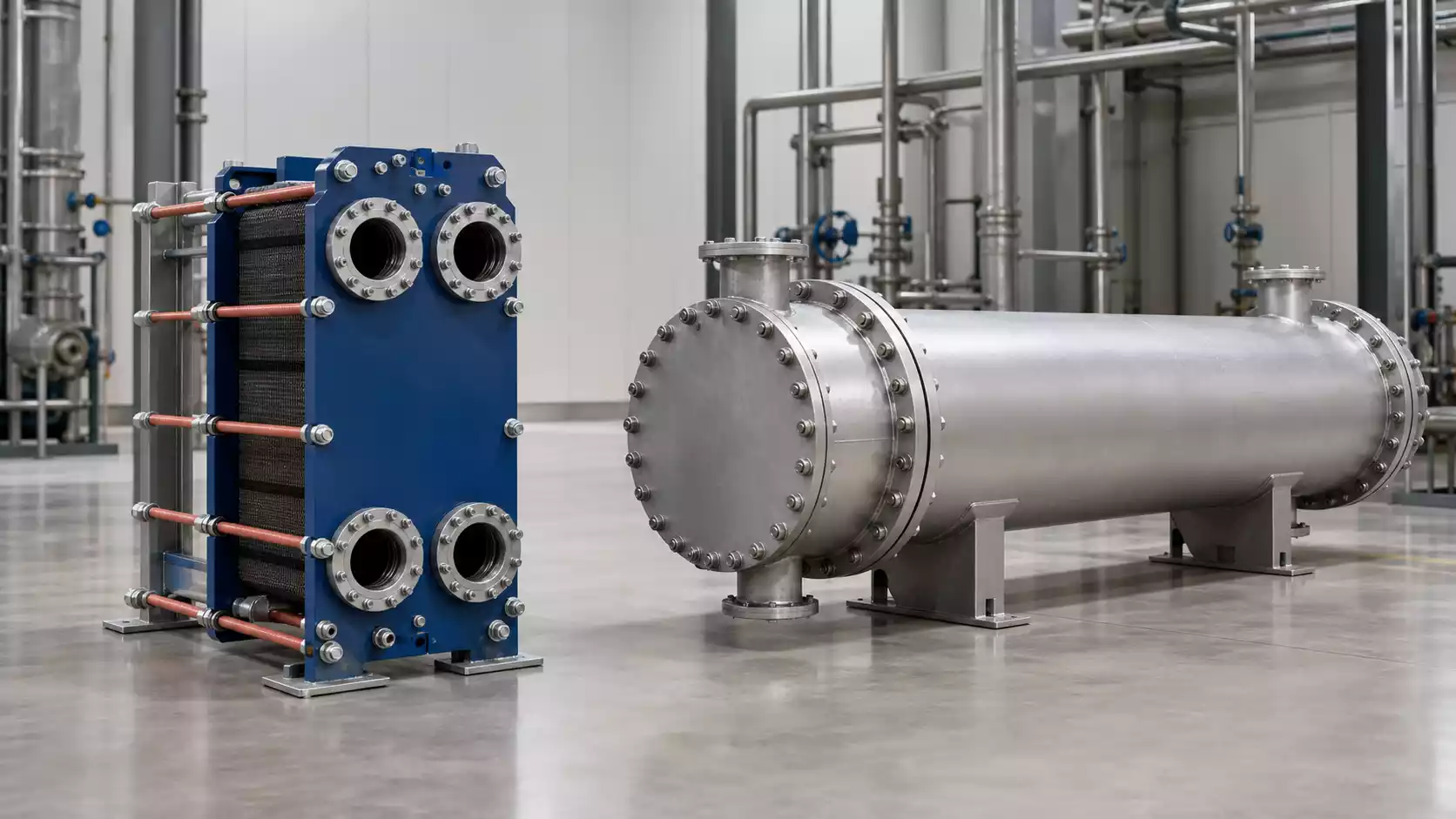
Plate and frame heat exchanger applications in India
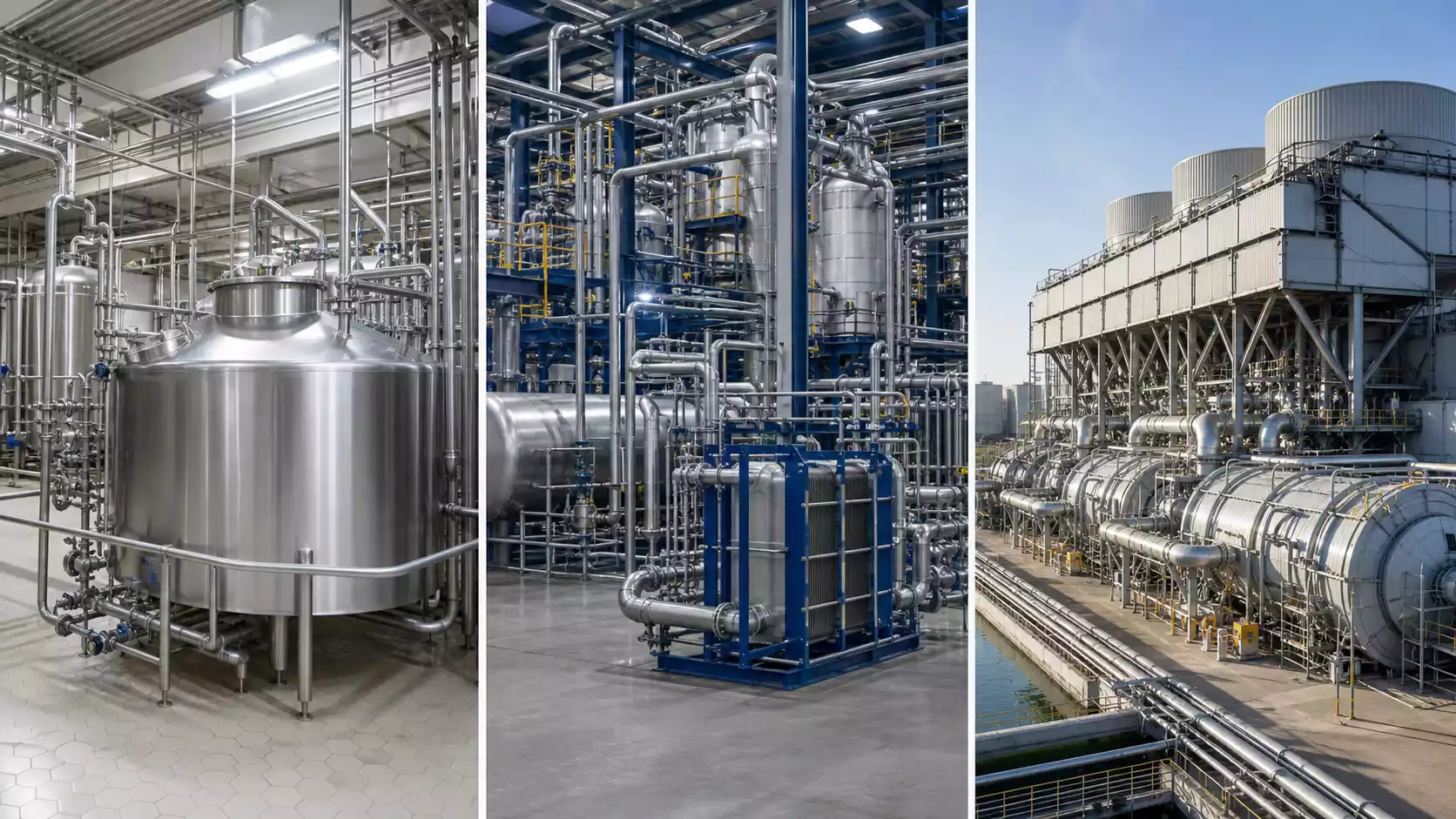
Plate and Frame Heat Exchangers can be used in almost any industry. Here at KKR Bose Design Services Pvt. Ltd. we provide customized heat exchanger solutions that are tailored to your specific process and application. Whether you need your heat exchanger to cool a product, pasteurize milk, process chemicals, recover waste heat, or provide utility services there is a heat exchanger that can do the job.
Our Plate and Frame Heat Exchanger designs are used in the following industries:
- Food & Beverage
- Dairy
- Chemical Processing
- Petrochemical
- Oil & Gas
- Pharmaceutical
- HVAC
- Marine
- Pulp & Paper
- Power Generation
- Renewable Energy
- Water Treatment
- Process Manufacturing
We make sure that your heat exchanger is built to meet your process’s thermal, mechanical, and operating requirements.
plate and frame heat exchanger maintenance
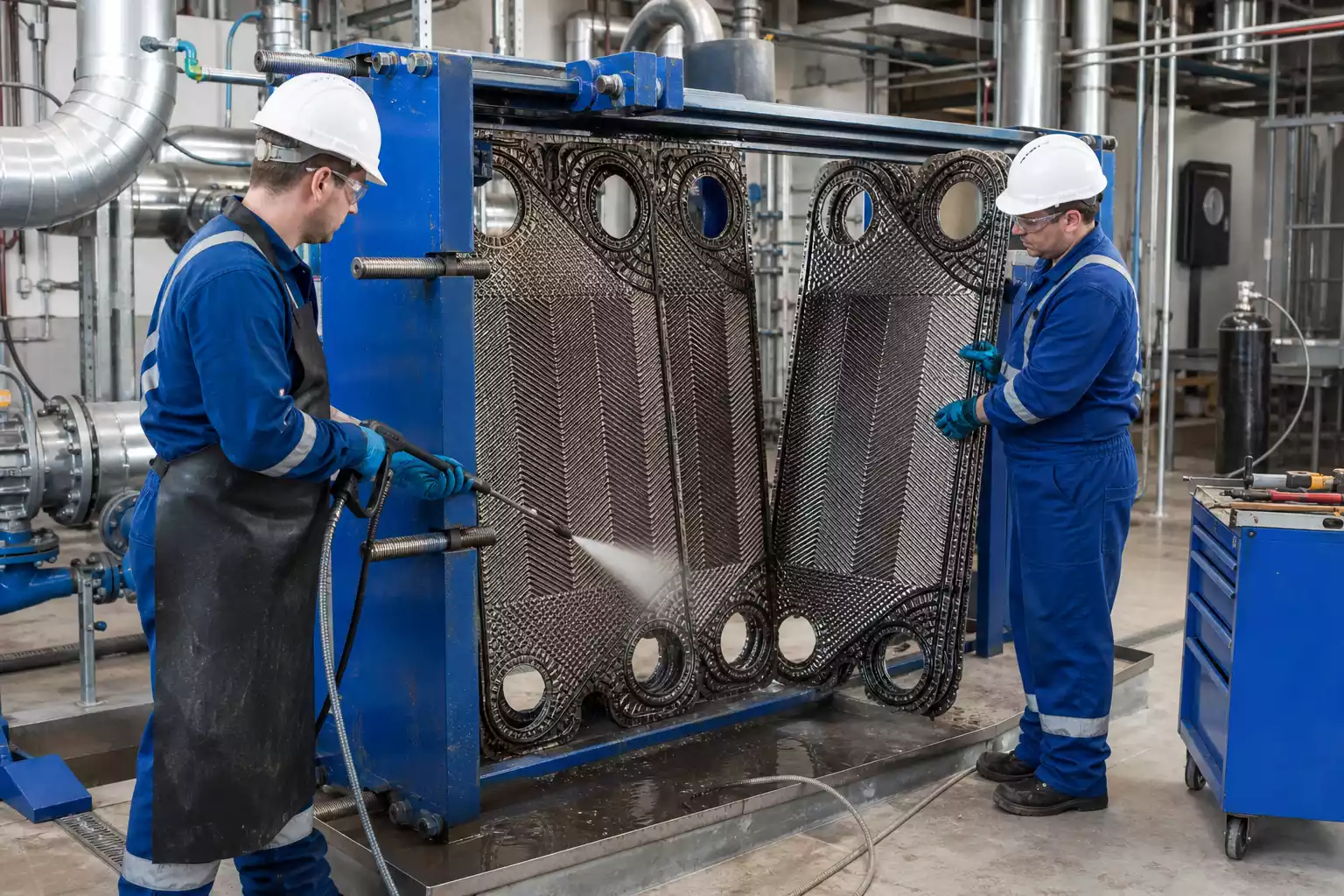
Heat exchanger maintenance is important to ensure your heat exchanger runs efficiently and lasts a long time. During normal operation, your heat exchanger can accumulate minerals, scale, fouling, and leftovers from your process which decreases its ability to transfer heat. At KKR Bose Design Services, we design heat exchangers that allow you to easily remove the plate pack for inspection, cleaning, gasket replacement, and any other maintenance tasks.
Once opened, cleaning can restore your heat exchanger’s heat transfer efficiency back to normal, reducing energy usage and preventing unscheduled downtime. Our engineers understand the importance of maintenance when designing your heat exchanger and incorporate features that allow you to perform maintenance quickly and easily.
Benefits of Regular Maintenance
Some benefits of routine maintenance include:
- Increased heat transfer efficiency
- Decreased energy usage
- Reduced fouling and scaling
- Longer gasket life
- Reduced number of unscheduled shutdowns
- Lower maintenance costs
- Increased plant reliability
- Extended equipment lifetime
Top Heat Exchanger Manufacturers in India
KKR Bose Design Services is a professional heat exchanger design and engineering firm located in India. We provide custom heat exchanger design services to industrial clients all over the world. With over 15 years of experience in the engineering field, we offer heat exchanger design services to OEM’s, EPC contractors, engineering consultants, and the processing industry.
Our experienced team of engineers specializes in the design of Plate and Frame Heat Exchangers, Shell & Tube Heat Exchangers, Pressure vessels, Process Equipment, and Mechanical Engineering. Every project we undertake is performed using leading engineering software, meets international design codes, and undergoes multiple rounds of quality checks. This guarantees that you’ll receive equipment that provides optimal thermal performance, mechanical strength, and can operate reliably for years to come.
Our team does not use template designs when designing your heat exchanger. Instead, we perform calculations and select the perfect material based on your application’s process conditions, temperature, pressure requirements, and fluids being processed to optimize heat exchanger size and efficiency.
Services
Explore our engineering services – https://bosedesignservices.co.in/services/
Contact Us
Let our engineers put our knowledge to work for you. Get in contact with our team today to discuss your project and receive a custom heat exchanger design quote.
FAQ
How does plate and frame heat exchanger work?
A Plate and Frame Heat Exchanger transfers heat between two fluids while keeping them separate from each other. It is built by stacking a set of thin corrugated metal plates inside of a rigid plate frame. Hot and cold process fluids flow through alternate channels between the plates where heat exchange occurs across the metal surfaces.
The plates create turbulence for enhanced heat transfer efficiency within a compact size. Plate and frame heat exchangers are extremely energy-efficient heat exchangers which are used to heat or cool quickly for industries such as food & beverage, pharmaceuticals, chemical processing, HVAC, power plants and more.
What parts make up a plate and frame heat exchanger?
Heat exchanger plates are designed with several critical parts that play important roles in facilitating efficient heat transfer and reliable operation. These parts include durable:
- Heat transfer plates,
- Fixed frame plate,
- Movable pressure plate,
- Guide bars,
- Support column
- Tightening bolts,
- Gaskets,
- Inlet and outlet nozzles
They are precisely engineered to accommodate process conditions including temperature and pressure ratings, and fluid characteristics. Material selection also plays a critical role in ensuring leak free operation for long life; common plate materials include stainless steel, titanium, Hastelloy, and other corrosion resistant alloys.
What is the difference between Plate Heat Exchanger and Shell and tube heat exchanger?
There are several differences between these types of heat exchangers including design, application, heat transfer efficiency, installation space required, and cleaning/maintenance considerations.
A Plate Heat Exchanger design allows for a higher heat transfer efficiency; it also takes up less space and can be easily cleaned and expanded by adding additional plates. These heat exchangers are typically used for liquid to liquid heat transfer.
A Shell and Tube Heat Exchanger can typically handle higher pressures and temperatures as well as vacuum applications. These heat exchangers are more commonly used for phase change applications and are used in refinery, petrochemical plants, and other heavy industries.
The application will determine which heat exchanger solution is best for your process.
How do you determine the size/plates required?
KKR Bose calculates your heat exchanger size based on heat transfer requirements. Thermal design calculations are performed to determine factors such as heat duty, size (footprint), fluid flow rate, inlet and outlet temperatures, specific heat, pressure rating, fluid properties, fouling factors, allowable pressure drop, and many other important factors.
Based on calculations, we will determine plate type, number of plates required, flow configuration, channel arrangement, and required heat transfer area needed to meet your process conditions.
What pressure can plate and frame heat exchanger work under?
Heat exchangers can typically operate at various ranges of pressures. Standard plate heat exchangers can typically operate at low to medium pressures. However, if your process requires a heat exchanger that can operate at high pressures there are specially engineered welded plate heat exchangers or reinforced plate heat exchangers that can safely operate at these conditions.
At KKR Bose, each heat exchanger is custom designed to meet your process conditions and all international design codes to ensure safe and long-term operation.
Where are plate and frame heat exchangers used the most?
Simply put, wherever heat needs to be transferred quickly and efficiently. Here are a few examples where plate and frame heat exchangers can be found:
- Food & Beverage Processing
- Dairy Industry
- Pharmaceuticals
- Chemical Processing
- Petrochemical Plants
- Oil & Gas Industry
- HVAC Heating and Cooling
- Power Plants
- Marine Industry
- Water Treatment
- Wastewater Treatment
- Renewable Energy Plants
- Process Industries
Plate and frame heat exchangers are found in almost every industry due to their versatility, high heat transfer efficiency, and ease of maintenance.
How frequent should maintenance and plate cleaning be performed?
Depends on how your plant is running. But as a rule of thumb, plate heat exchangers should be inspected every so often. And if fouling is observed nearing your pressure drop limits or reducing heat transfer efficiency, perform cleaning.
Maintenance includes plate cleaning as well as visually inspecting the gaskets, making sure all bolts are tight, and replacing any worn seals/sealing components.
Expert Plate & Frame Heat Exchanger Design Services Needed?
Are you designing a new process plant? Upgrading existing equipment? Looking for the perfect heat exchanger for your application? Look no further. At KKR Bose Design Services Pvt. Ltd. we offer:
- THERMAL DESIGN & RATING
- Mechanical Design
- Plate & Frame Heat Exchanger Design
- Shell & Tube Heat Exchanger Design
- Fabrication Drawings
- GA (General Arrangement) Drawings
- Pressure Drop Analysis
- Engineering Calculations
- Design Optimization
- EPC Engineering Support